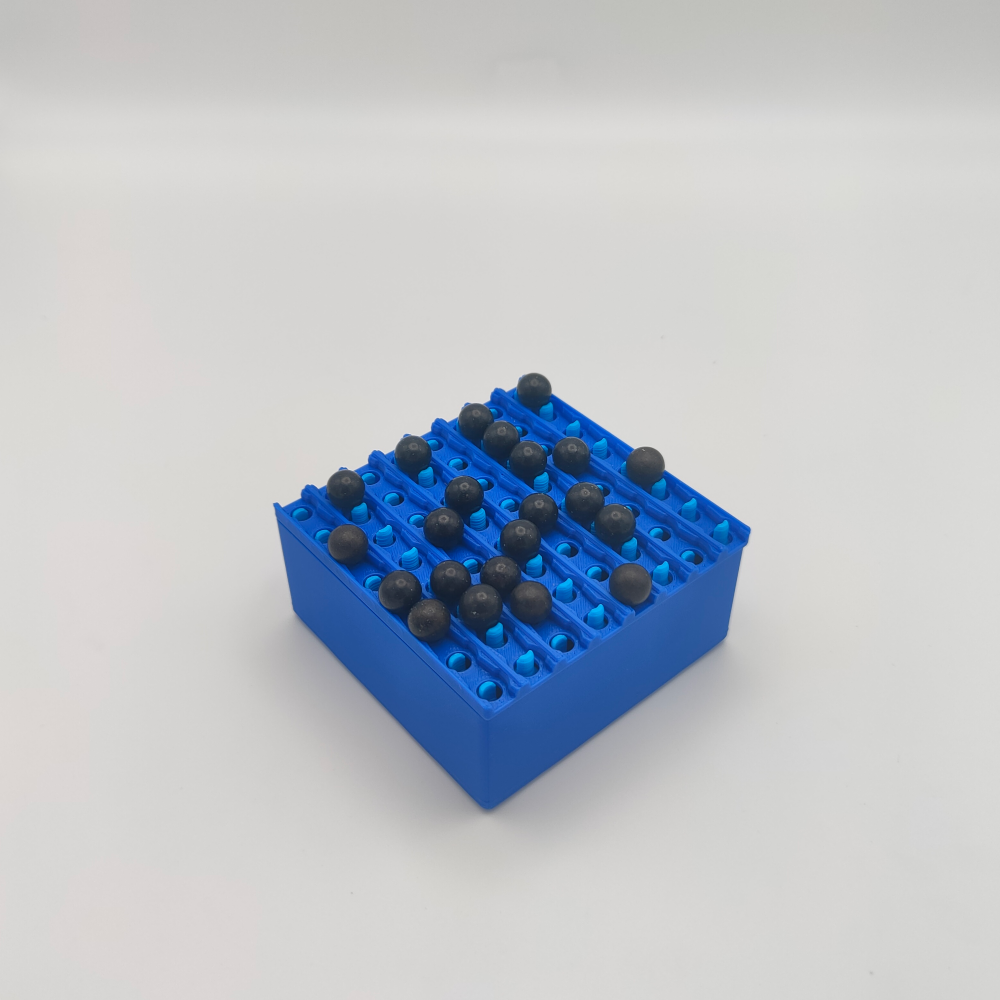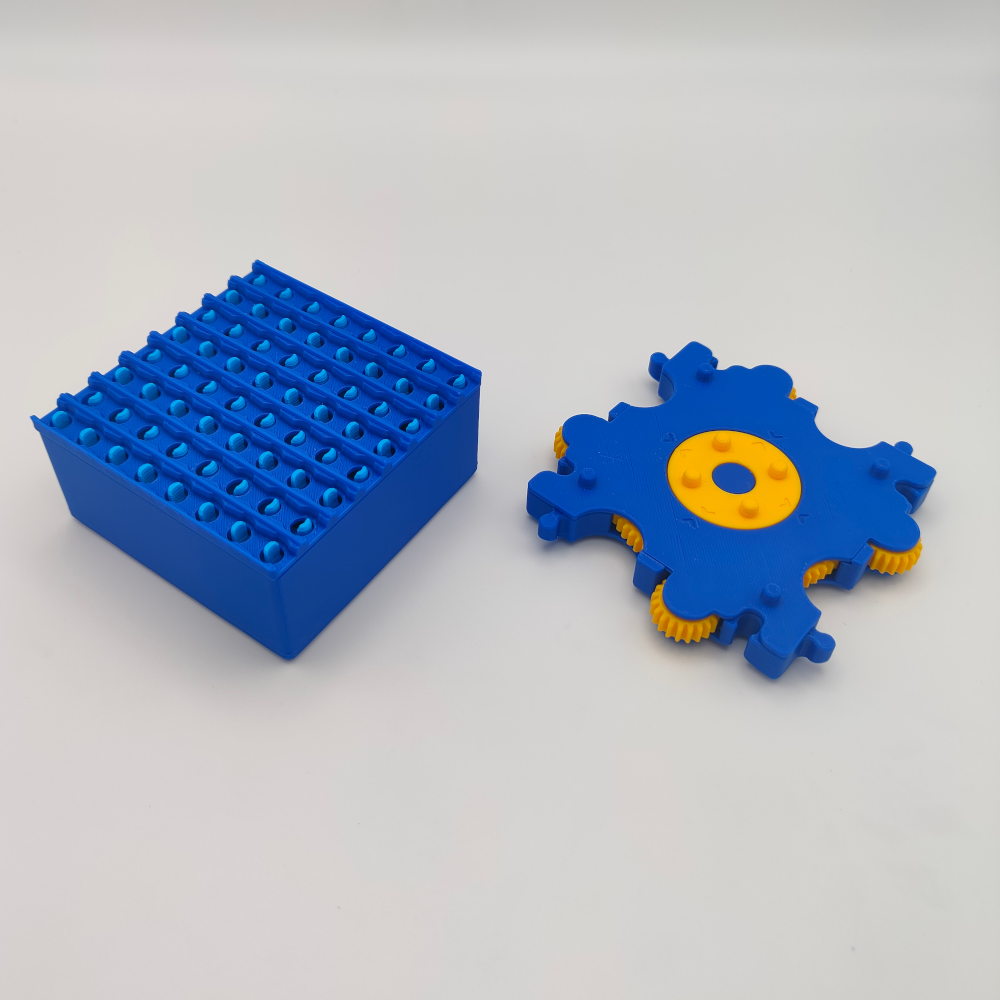
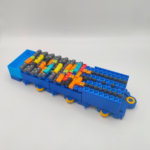
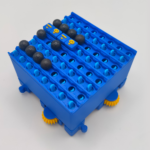
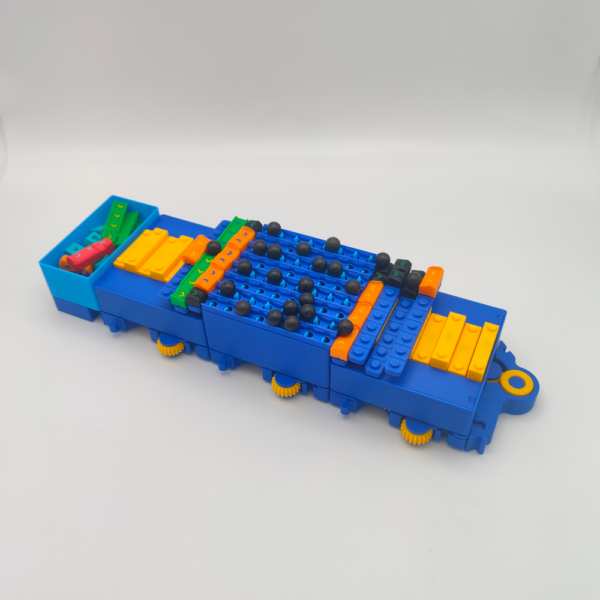
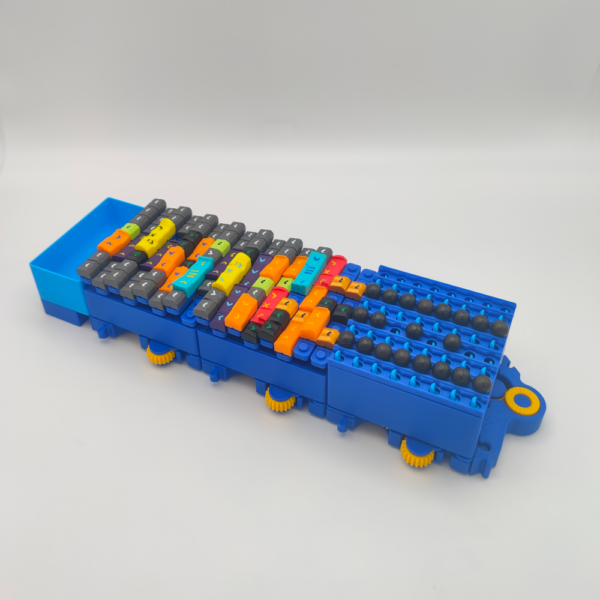
buffer
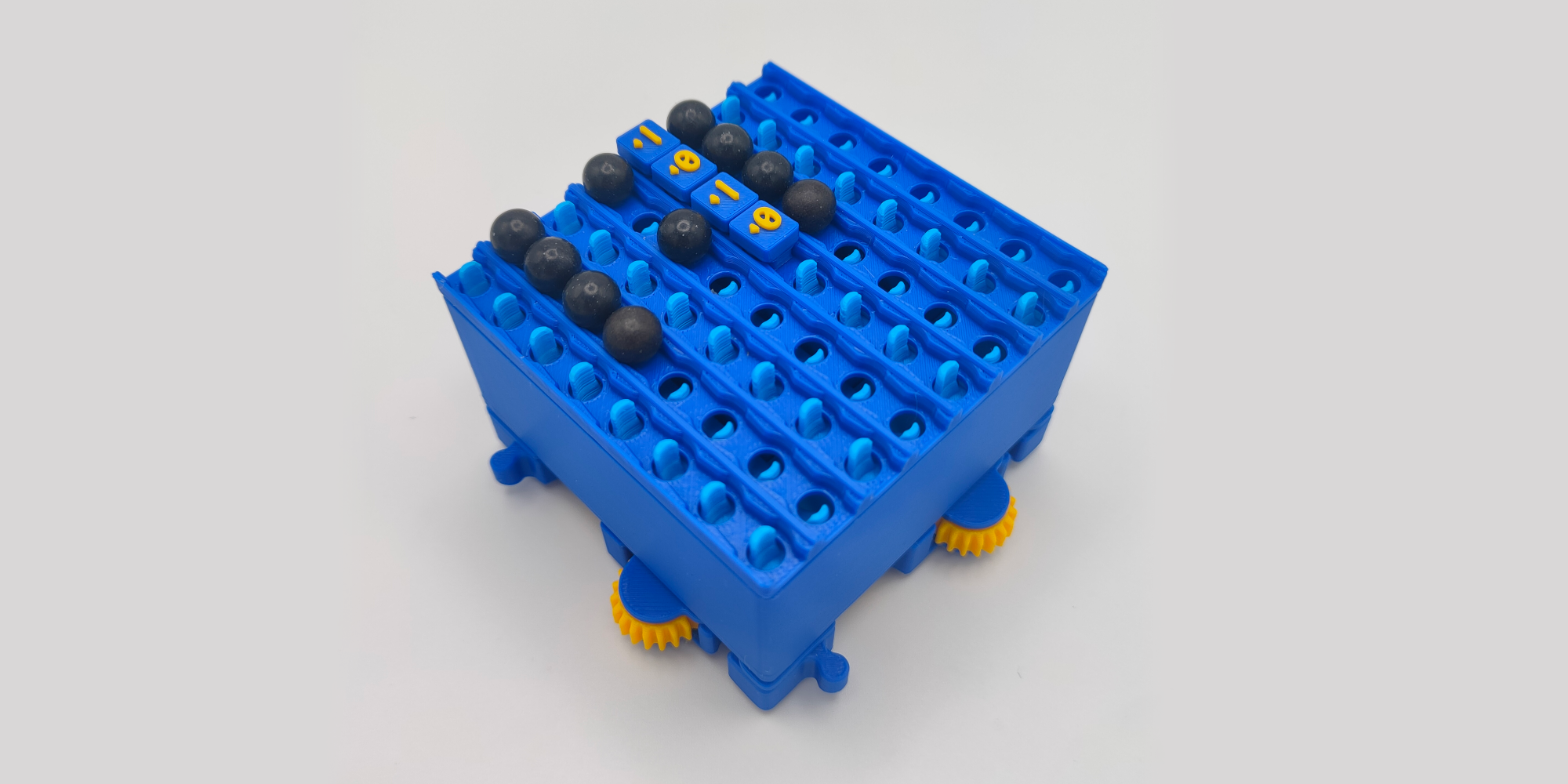
The buffer allows you to store data twice more efficiently; set up inputs to your patterns; display pattern results; perform bit shifts; and various other utilities.
£20.00
United States
Free shipping on US orders over £150 GBP
The buffer is a GRIB module that makes it easier to process data in roons.
The buffer lets you:
- Store data twice as efficiently
- Easily set up inputs to your patterns
- Visualise outputs from your patterns
- Send marbles over long distances without manual setup
- Create arbitrarily-sized memory blocks in moments
The buffer comes with a set of binary markers for labelling inputs/outputs.
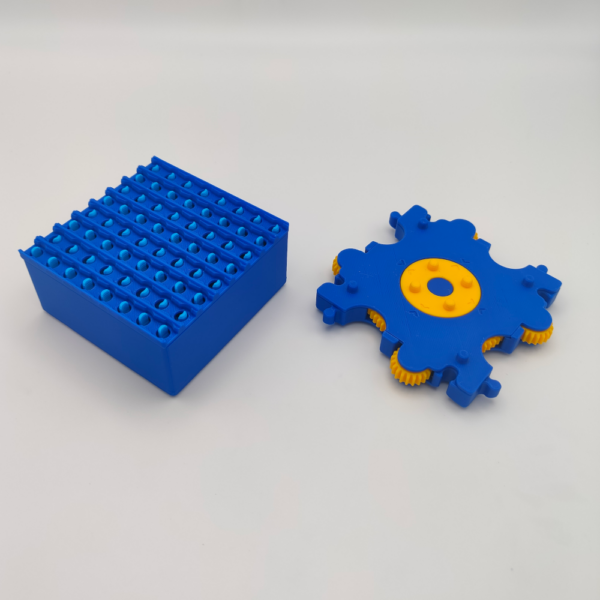
Note: requires a GRIB drive to function (sold separately — open-source version also available for 3D printing)
memory
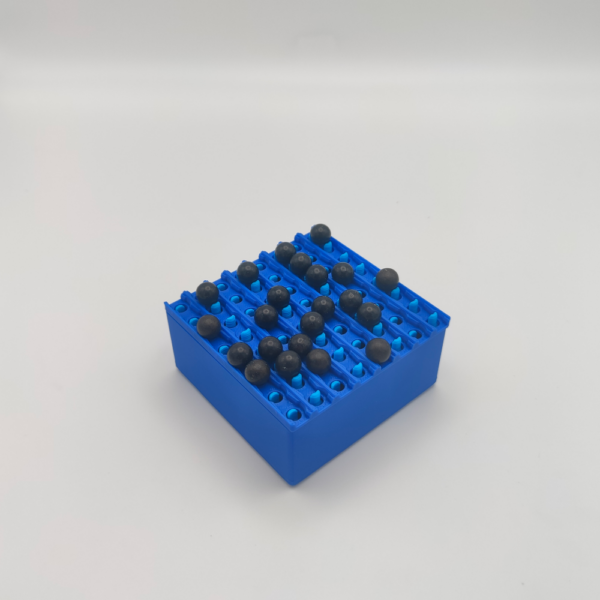
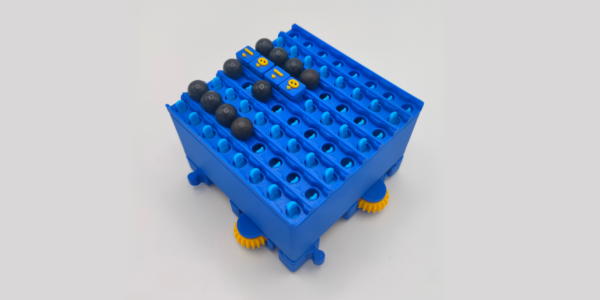
Each buffer has 64 cells, allowing it to store twice as much data as a single roons disk, while not requiring you to use up any tiles. This makes it convenient for compactly storing up to 8 bytes of data.
We can customise exactly how much of our buffer is used to store data by placing different roons at the entry/exit points. For example, we could have:
- A single 8-byte block of memory
- Two separate 4-byte blocks
- A 4-byte block, leaving the other 4 channels open for data transfer
- Four 2-byte blocks
- etc
data input
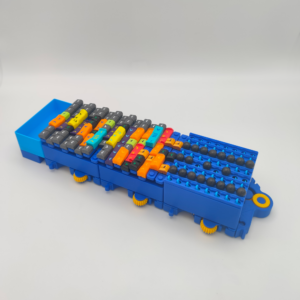
When testing a pattern, we typically want to provide a variety of inputs to check that it’s working.
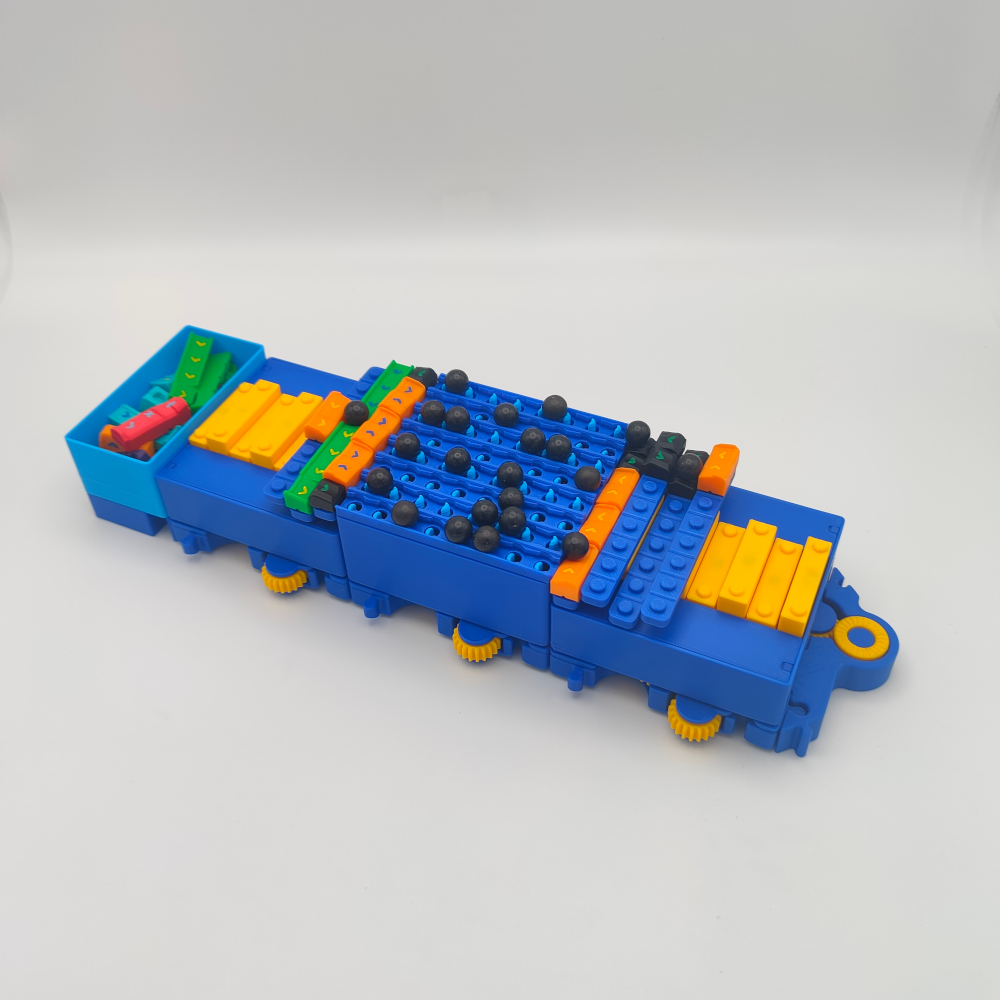
A buffer makes this easy to set up. We just place the required sequence of marbles on each data channel and run the pattern — no additional work required.
output visualisation
Buffers also make it easier to read the output of a pattern. By wiring the output into a buffer’s channel, we can readily see the result of the computation. And because a buffer has twice the capacity of a regular disk, we can output a full byte of data before the marbles reach the end.
transfer
For larger patterns, it’s sometimes necessary to transport data across large distances. Instead of manually setting up paths for your data, the buffer automatically provides 8 channels — 4 going north, 4 going south — making it easy to send data across a full disk’s length.
chaining
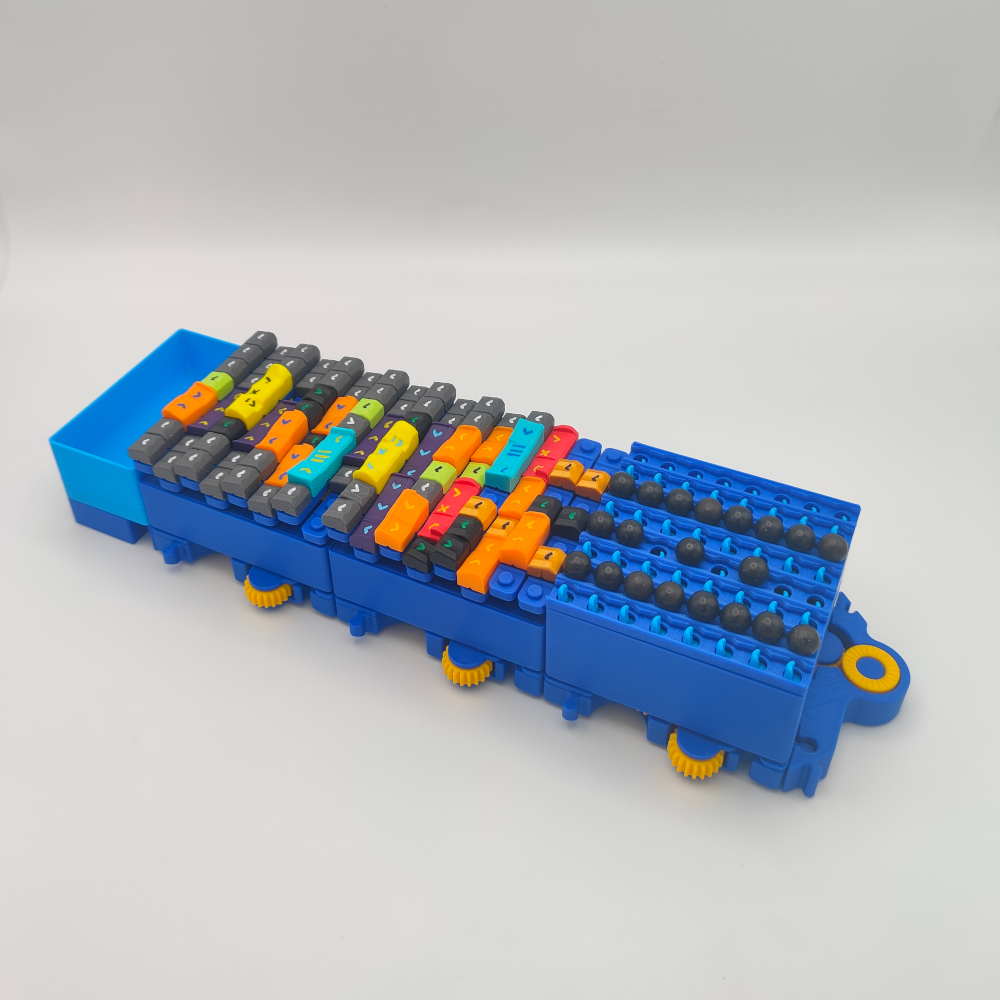
Adjacent buffers can feed directly into each other, without any extra setup. Two buffers in sequence can hold 16 bytes; four buffers can hold 32 bytes.
We can also place buffers in parallel (though this requires roons to be placed to wire up their inputs/outputs). Combined with placing buffers in sequence, we can create an arbitrarily-sized grid of buffers to hold as much data as we want.
preorder
We’re currently fulfilling the original Kickstarter rewards. The estimated dispatch time for preorders is 7-8 weeks.
Each kit is manufactured in our workshop in Camden Town, London. We use lots of machines that make cool beeping sounds, and finish each kit by hand.
Kits will be dispatched in this order:
- Kickstarter backers
- Post-Kickstarter reservations (based on the date the reservation was made)
- Preorders (based on the date of the preorder)
Kickstarter backers
If you’re a Kickstarter backer (thanks!), please be aware there may be small differences between the original reward tiers and the kits available here on whom mart — make sure to check the product description.
consolidating orders
We may be able to bundle your order with your original Kickstarter reward — more info here.